
If you ask offshore anglers to name one of the most exciting fish to catch, mahi mahi almost always makes the list.
Known for their electric colors, acrobatic fights, and aggressive feeding habits, mahi mahi deliver nonstop action that makes them a favorite among both first time anglers and seasoned offshore veterans.
At Sea Leveler, mahi trips are some of the most visually exciting charters we run. Between the speed of the strike and the flash of neon green and blue beneath the surface, every hookup feels like a spectacle.
If you are considering an offshore fishing trip out of Port Canaveral, here is what you can expect when targeting mahi mahi with us.
What Makes Mahi Mahi So Special
Mahi mahi, also known as dolphin fish or dorado, are one of the ocean’s most recognizable offshore species.
Their appeal comes from a combination of factors:
- Bright, glowing coloration
- Surface feeding behavior
- High speed runs
- Aerial jumps during fights
When hooked, mahi often light up in vibrant shades of green, gold, and electric blue. It is a visual experience as much as a fishing one.
They are also known for traveling in groups, which creates opportunities for multiple catches once a school is located.
Offshore Habitat and Migration
Mahi mahi thrive in warm offshore waters and are highly migratory.
Out of Port Canaveral, we typically find mahi between 15 and 30 miles offshore, often near floating structure such as:
- Weed lines
- Floating debris
- Buoys
- Current edges
These floating environments attract baitfish, which in turn attract mahi.
Our captain scans for bird activity, color changes in the water, and floating cover that could signal mahi presence.
Because mahi move frequently, locating them requires constant observation and strategic trolling patterns.
The Trolling Approach
We usually begin mahi trips by trolling offshore waters.
Using a spread of skirted lures and rigged baits, we cover ground while searching for active fish.
Mahi are aggressive feeders, which means strikes are often explosive. It is not uncommon to see them chasing lures right to the boat before committing.
When a fish hits, the reaction is instant.
The rod bends, the reel screams, and the fish often launches into the air within seconds.
Surface Chaos and Multiple Hookups
One of the most exciting aspects of mahi fishing is what happens after the first fish is hooked.
Because they travel in schools, other mahi often follow hooked fish to the boat. This creates opportunities to cast additional lines and hook multiple fish at once.
It becomes fast paced and highly interactive.
Guests rotate turns, watch fish dart beneath the surface, and sometimes witness several mahi being fought simultaneously.
This schooling behavior makes mahi trips especially engaging for families and groups who want consistent action.
The Fight: Speed and Acrobatics
Mahi mahi are not the heaviest offshore fish, but they make up for it with speed and aerial displays.
Anglers can expect:
- Fast surface runs
- Direction changes
- Repeated jumps
- Color flashes beneath the water
Their fight is energetic but approachable, making them ideal for beginners who want excitement without the extended physical strain of larger tuna battles.
Landing a mahi often feels like a perfect balance of challenge and fun.
Prime Seasons for Mahi Fishing
Mahi prefer warmer water, which makes late spring through early fall peak season out of Port Canaveral.
During summer months, weed lines become more prominent, creating prime mahi habitat offshore.
That said, mahi can appear outside traditional peak windows depending on currents and water temperatures. Offshore fishing always carries an element of unpredictability, which is part of the adventure.
Our captain tracks seasonal patterns closely to maximize mahi opportunities whenever conditions allow.
A Visual Offshore Experience
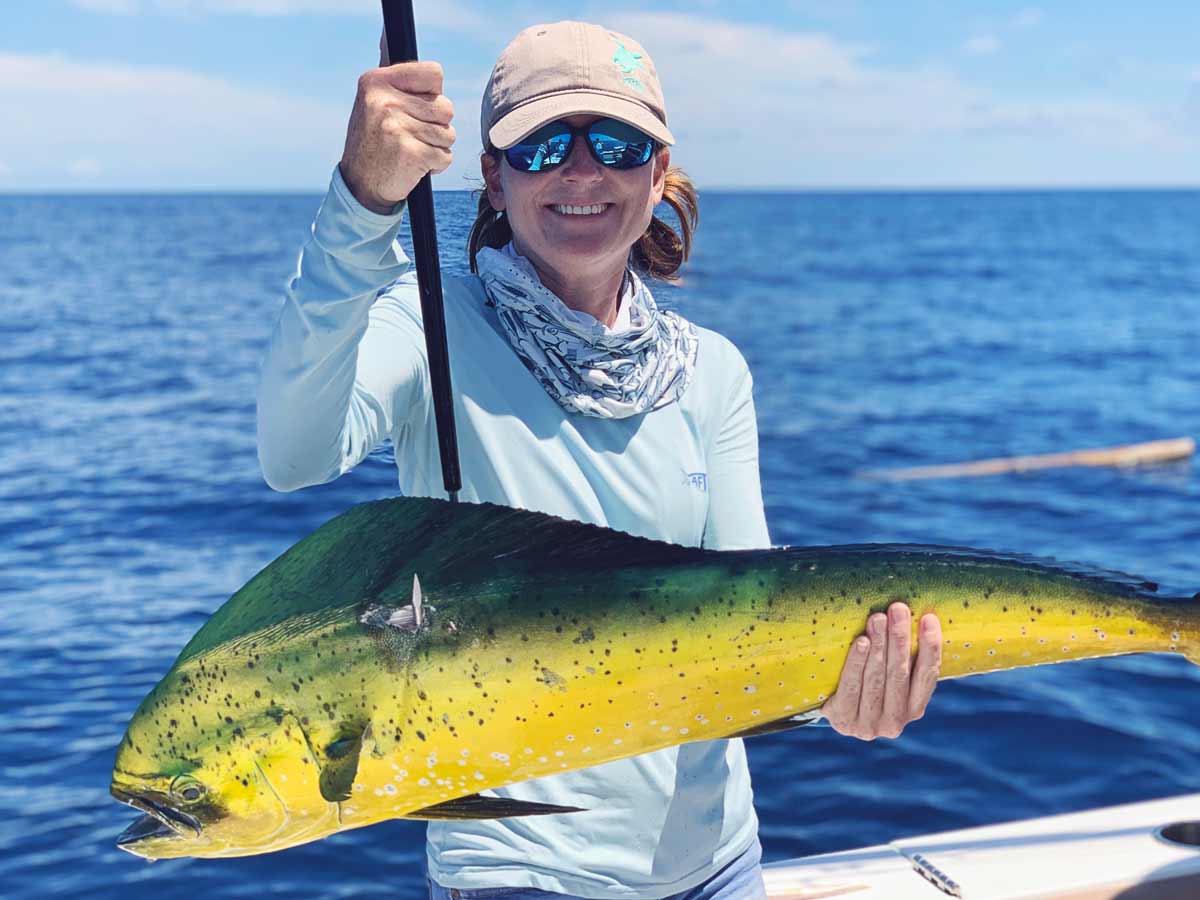
Few fish photograph better than mahi mahi.
Their bright coloration, combined with offshore sunlight, makes for stunning catch photos that guests love sharing.
What many do not realize is that mahi colors fade after being landed, which makes those first moments boat side especially memorable.
It is a reminder of just how vibrant offshore marine life can be.
Excellent Table Fare
Beyond the fight, mahi mahi are also prized for their flavor.
Their firm, mild fillets are perfect for grilling, blackening, or preparing in tacos and tropical dishes.
Many guests choose to keep their catch for fresh meals, turning the fishing trip into a full ocean to table experience.
There is nothing quite like enjoying mahi you caught yourself later that evening.
Why Guests Love Targeting Mahi with Sea Leveler
Mahi charters combine everything people imagine when booking offshore fishing.
They offer:
- High visual excitement
- Frequent action
- Group friendly fishing
- Beautiful catches
- Delicious table fare
For first timers, mahi provide the perfect introduction to offshore species.
For experienced anglers, they offer fast paced fun between heavier trophy pursuits.
At Sea Leveler, we love targeting mahi because they create unforgettable moments for guests of all skill levels.
FAQ: Mahi Mahi Fishing Charters
How far offshore do we go to catch mahi mahi?
Most mahi fishing takes place 15 to 30 miles offshore, depending on water temperature and floating structure.
When is the best time of year to catch mahi?
Late spring through early fall is typically peak mahi season, though they can appear outside those windows.
Are mahi good for beginners to catch?
Yes. Their fights are exciting but manageable, making them great for first time offshore anglers.
Can we keep the mahi we catch?
Absolutely. Mahi are excellent table fare, and many guests take fish home for fresh meals.
What makes mahi fishing different from tuna fishing?
Mahi fights are faster and more acrobatic, while tuna fights are heavier and endurance based. Both offer unique offshore excitement.