

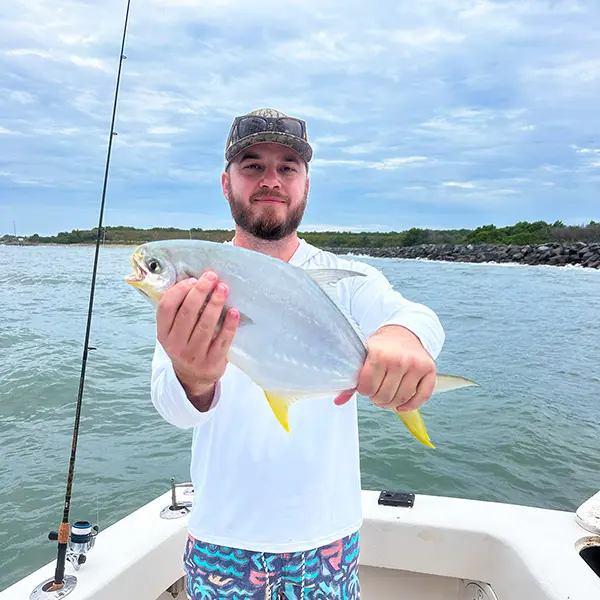
Florida Pompano Fishing Guide
Small silver fighters and spirited light-tackle battles.
Nearshore
This Florida Pompano fishing guide is for anglers planning a trip from Port Canaveral on Central Florida’s Atlantic coast. Explore seasonal opportunities, trip options, and what to expect on the water, based on Sea Leveler’s trip records and Captain Greg’s firsthand knowledge.
Florida pompano are small, hard-fighting coastal fish with rounded silver bodies and an orange belly. They feed along sandy beach troughs and sandbars and are excellent eating.
- Typical size
- 2–5 pounds
- Edibility
- Excellent
Florida Pompano seasons and fishing opportunities
Florida pompano opportunities along Port Canaveral’s ocean beach improve in winter and early spring. Our trip records show the strongest opportunities in March–April, with a fall return around November. Moving schools, swell, water clarity, and the day’s fishing plan influence opportunities. This calendar reflects nearshore fishing from the boat.
Seasonal opportunity: 1 = lowest, 5 = highest for this fish. Closed months are marked separately. Ratings are not catch guarantees.
These ratings combine Sea Leveler’s trip records and fishing reports with Captain Greg’s 30+ years of local fishing experience. Captain Greg has more experience than any other captain currently running charter trips out of Port Canaveral.
Fishing for Florida Pompano
Trip options
Family Fun
Fishing techniques
Small live shrimp, sand fleas, or pompano jigs fished near the bottom.
Ideal conditions
Fishable water along the Atlantic beach or Canaveral Bight, with manageable swell, moving water, and crustacean food around sandy troughs and sandbars.
What the experience is like
Finding the Trough
The captain works along a fishable stretch of ocean beach and chooses a sandy trough or area just outside the surf break. He prepares light tackle with small shrimp, sand fleas, or a pompano jig.
The Bite and Fight
You present the bait or jig close to the bottom and follow the captain’s coaching when a fish bites. Pompano fight hard for their size. When a school passes through, bites can come in bursts before the fish move on.
At the Boat
The captain lands and identifies the catch, then checks whether it can be harvested. Whiting, drum, or other beach fish may take the same presentation. He may try another stretch of beach as the schools move.
Captain Greg’s take
Pompano schools move along the beach, so we may need to work different stretches to find them. When a school passes through, the action can come in a burst. They pull hard on light tackle and are excellent eating.