

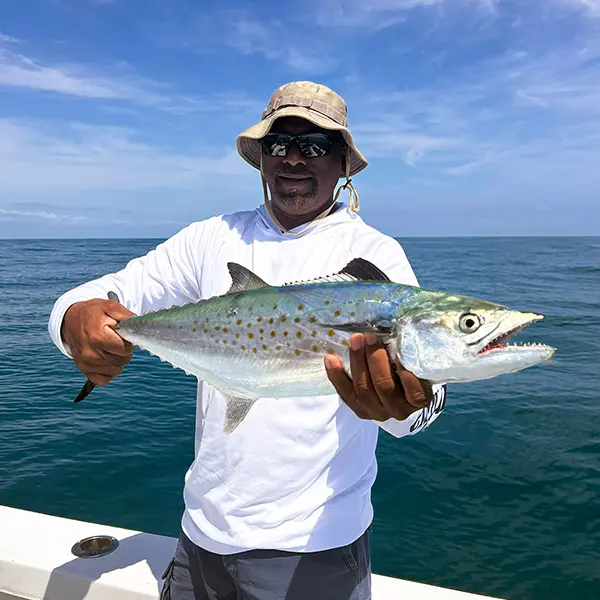
Spanish Mackerel Fishing Guide
Spotted speedsters and quick-striking schools.
Nearshore · Offshore
This Spanish Mackerel fishing guide is for anglers planning a trip from Port Canaveral on Central Florida’s Atlantic coast. Explore seasonal opportunities, trip options, and what to expect on the water, based on Sea Leveler’s trip records and Captain Greg’s firsthand knowledge.
Spanish mackerel are fast, schooling fish with sharp teeth that chase small baitfish along the beach and nearshore waters. Feeding schools can provide lively casting or trolling action.
- Typical size
- 1–8 pounds
- Edibility
- Good
Spanish Mackerel seasons and fishing opportunities
Spanish mackerel are possible year-round around Port Canaveral’s ocean-side beaches and nearshore waters. Spring bait schools provide opportunities, with stronger action again in fall and early winter, especially October–November. The captain looks for feeding schools along the beach, shoals, port entrance, or buoys. Offshore trips may also encounter them, but this calendar reflects nearshore opportunities.
Seasonal opportunity: 1 = lowest, 5 = highest for this fish. Closed months are marked separately. Ratings are not catch guarantees.
These ratings combine Sea Leveler’s trip records and fishing reports with Captain Greg’s 30+ years of local fishing experience. Captain Greg has more experience than any other captain currently running charter trips out of Port Canaveral.
Fishing for Spanish Mackerel
Trip options
Family Fun · Half-day offshore
Fishing techniques
Casting small shiny spoons or other lures to feeding schools, or trolling near bait.
Ideal conditions
Diving birds, visible surface feeding, and concentrated bait along the beach, shoals, port entrance, or buoys.
What the experience is like
Finding the School
The captain watches for diving birds and bait being pushed to the surface. He brings the boat within casting range or positions the trolling spread near the feeding fish.
The Strike and Run
You cast a small shiny lure and retrieve it through the feeding area, or take a rod after a trolling strike. Spanish mackerel grab quickly and can make a sharp run, followed by head shakes as they approach the boat.
At the Boat
The captain handles the toothy fish and checks whether it can be harvested. Fish eligible for harvest go on ice, and others are released. When the school stays active, another cast can bring another opportunity.
Captain Greg’s take
Diving birds and bait getting pushed to the surface are good things to watch for. When a school of Spanish mackerel stays up and feeding, casting small shiny lures can bring quick action. The bait moves, so we move with it.