

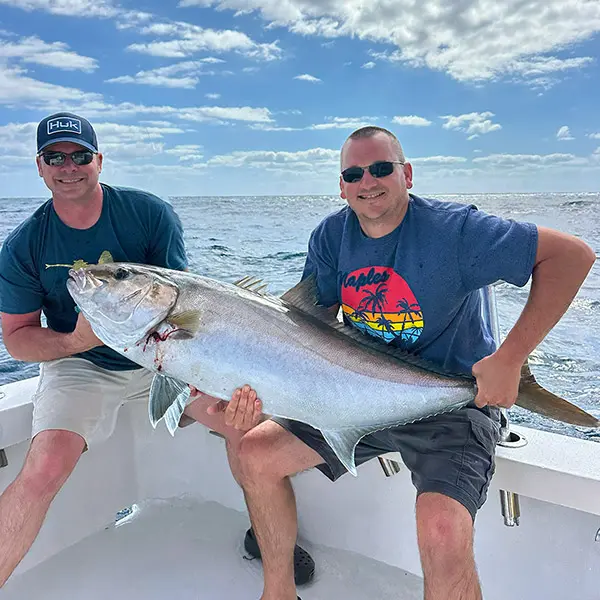
Amberjack Fishing Guide
Reef donkeys and stamina-testing battles.
Offshore
This Amberjack fishing guide is for anglers planning a trip from Port Canaveral on Central Florida’s Atlantic coast. Explore seasonal opportunities, trip options, and what to expect on the water, based on Sea Leveler’s trip records and Captain Greg’s firsthand knowledge.
Greater amberjack are large, powerful jacks known for a heavy pull and exceptional stamina. Often schooling above deep reefs or other structure, these “reef donkeys” deliver a demanding fight all the way to the surface.
- Typical size
- 15–60 pounds
- Edibility
- Good; harvest depends on current rules
Amberjack seasons and fishing opportunities
Stronger opportunities in February–March and May–June when the captain works deeper structure. Greater amberjack are closed to fishing and harvest April 1–30. Conditions and the day’s fishing plan influence opportunities throughout the rest of the year.
Seasonal opportunity: 1 = lowest, 5 = highest for this fish. Closed months are marked separately. Ratings are not catch guarantees.
These ratings combine Sea Leveler’s trip records and fishing reports with Captain Greg’s 30+ years of local fishing experience. Captain Greg has more experience than any other captain currently running charter trips out of Port Canaveral.
Fishing for Amberjack
Trip options
Full-day offshore · Long-range bottom fishing
Fishing techniques
Presenting live bait or vertical jigs to fish holding above deep reefs or other structure.
Ideal conditions
Deep reefs or other substantial structure with fish marked above it on the bottom machine. Bait and workable current help keep the school feeding, while a longer trip gives the captain time to reach productive deeper grounds.
What the experience is like
Finding the Fish
The captain heads to deep reefs or other substantial structure and checks the bottom machine for fish holding above it. He shows you how to lower a live bait or vertical jig into the school.
The Bite and Fight
When you feel a heavy pull, reel hard under the captain’s direction to move the fish away from structure. Greater amberjack keep fighting all the way toward the surface, even after you’ve cleared the bottom. The captain coaches your rod position and may reposition the boat as you work through the sustained pull.
At the Boat
The captain lands and identifies the fish, then checks its size and current harvest rules. A legal keeper goes on ice, while fish that need to be released are returned to the water.
Captain Greg’s take
“Reef donkey” is a fitting name for an amberjack. You can get one clear of the structure and still have plenty of fight left. Sharks often try to take them on the way up, adding another challenge to landing a good fish. If you want a physical fight, an amberjack can certainly give you one!