

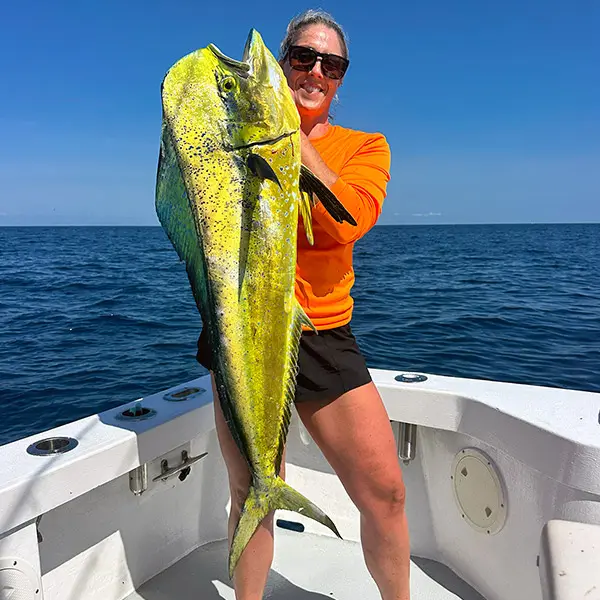
Mahi-Mahi Fishing Guide
Brilliant colors, big jumps, and sudden chaos.
Offshore
This Mahi-Mahi fishing guide is for anglers planning a trip from Port Canaveral on Central Florida’s Atlantic coast. Explore seasonal opportunities, trip options, and what to expect on the water, based on Sea Leveler’s trip records and Captain Greg’s firsthand knowledge.
Also called dolphin fish or dorado, mahi-mahi are known for brilliant green, blue, and yellow colors and acrobatic fights. They often gather around floating debris and weed lines, where finding one fish can lead to several hookups.
- Typical size
- 5–60 pounds
- Edibility
- Excellent
Mahi-Mahi seasons and fishing opportunities
April–May and October offer the strongest seasonal opportunities on regular offshore trips. Mahi are possible year-round, but conditions change daily. Full days and dedicated mahi trips can offer opportunities beyond the seasonal pattern. After rough weather, a full day gives us time to travel to clean water and look for favorable mahi conditions.
Seasonal opportunity: 1 = lowest, 5 = highest for this fish. Closed months are marked separately. Ratings are not catch guarantees.
These ratings combine Sea Leveler’s trip records and fishing reports with Captain Greg’s 30+ years of local fishing experience. Captain Greg has more experience than any other captain currently running charter trips out of Port Canaveral.
Fishing for Mahi-Mahi
Trip options
Half-day offshore · ¾-day offshore · Full-day offshore · Mahi trip
Fishing techniques
Trolling rigged ballyhoo along weed lines and current edges, slow trolling around structure, searching for floating debris, and presenting live bait or casting to fish once a school is located.
Ideal conditions
Clean blue water with weed lines, floating debris, current edges, or color changes. These areas can be especially productive after an extended stretch of rough seas. The location of suitable water and bait determines how far the captain needs to travel.
What the experience is like
While Slow Trolling
Mahi sometimes join the bite while we’re slow trolling live bait or rigged dead cigar minnows around offshore reefs and structure. You may be watching rods set for kingfish when a mahi strikes and comes flying out of the water. The captain coaches you through the fight and watches for other mahi following the hooked fish.
Trolling Ballyhoo
When the captain heads into blue water to look for mahi, he may troll a spread of rigged ballyhoo behind the boat. He works weed lines, current edges, and other promising areas while searching for fish. When a mahi hits, you take the rod as it runs and jumps. Several rods may go off if the boat crosses a school.
Casting to a School
A floating board, branch, or patch of weeds can hold a school of mahi. Sometimes they’ll even swim up to the boat while we’re bottom fishing. When these opportunities present themselves, the captain switches to spinning reels so anglers can cast to the fish and hook up. Other mahi often follow a hooked fish toward the boat. A long stretch of searching can suddenly turn into several hookups and some controlled chaos!
Captain Greg’s take
If mahi are the fish you really want, I’d give us time to look for them. A full day lets us reach better water and spend more time searching weed lines, current edges, and floating debris. We do catch mahi on shorter trips when they move closer, but we can’t count on that. For a trip focused on mahi, Sea Trident gives us another option to cover more water. Some days take a lot of looking, then one piece of floating debris can turn the whole trip around.